

Pros and Cons of FUT (Strip Surgery)


Pros and Cons of FUT Hair Transplant Surgery
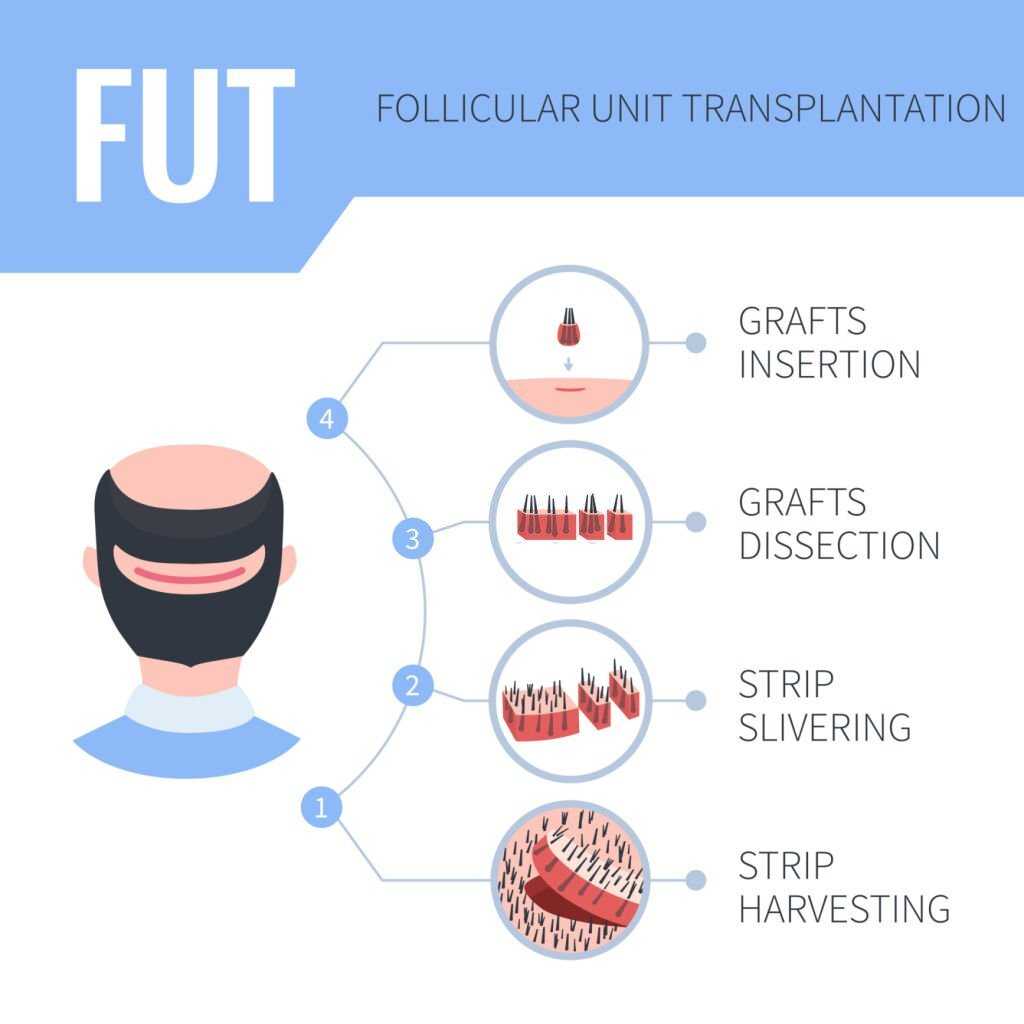
Today is going to be on the pros and cons of FUT surgery which is another way of describing a strip surgery. We are going to explain in depth about FUT surgery for hair transplantation, where it is appropriate, and what the limitations are.
History of strip surgery (FUT)
Let’s talk a little bit about strip surgery. Historically the first grafts were used in male pattern balding.
Strip surgery we’re done with a punch technique which started in the late 50s and went through till about the mid-90s and late 1980s.
Then we moved to a technique of taking the hairs from the same area but using a scalpel cutting an ellipse of skin out and sawing it out. That became the dominant technique from the late 1980s until the early 2000s when the alternative technique which is the FUE, which is another version of a punch technique gained popularity.
In a young patient with a lot of balding in the crown what we’re worried about in the long term is how much more balding is going to happen over the next 10, 15, 20 years and how do we find the safest hairs on the back.
In the occipital donor area, how do we find the safest areas to take that, this is likely to be enrolled in balding in the future. If you take in a strip of 100% of the hairs out of an area that’s a long way away from the border margin that looks like a safe bet.
Pros of FUT hair transplant surgery
- Safe donor area
The first advantage is a safer donor. This is an advantage as far as very concerned, particularly in our young patients. With modern hairstyles, today people have this desire to get back to work and not have anybody notice.
It’s always been a factor with our men, they don’t want anybody to know they’re having surgery. I call it secret men’s business.
- Discrete method
Another advantage I think for us in terms is the ability to only trim what we take, leave all the rest of the hair to a length that generally immediately covers up any signs of the sutures and the donor scar line that’s going to develop.
It’s discrete and I sort of underestimated how important that was to people. I’ve had a number of people that have come in and said:
I’ve done my research I really want to have an FUE surgery talk me through and we talk through. That’s fine with FUE you’re a candidate but we’re going to shave the entire back of their head because with FUE you need to shave the entire back of the head.
Patient: I need to have surgery and then I’ve got a meeting that I need to attend 2 days later so I can’t walk around with a shaved back head.
This is a deal-breaker for a lot of people and then they will switch to strip surgery just because they don’t like the notion of having to shave the entire back of the head and I respect that that’s fine.
How long does the crusting last?
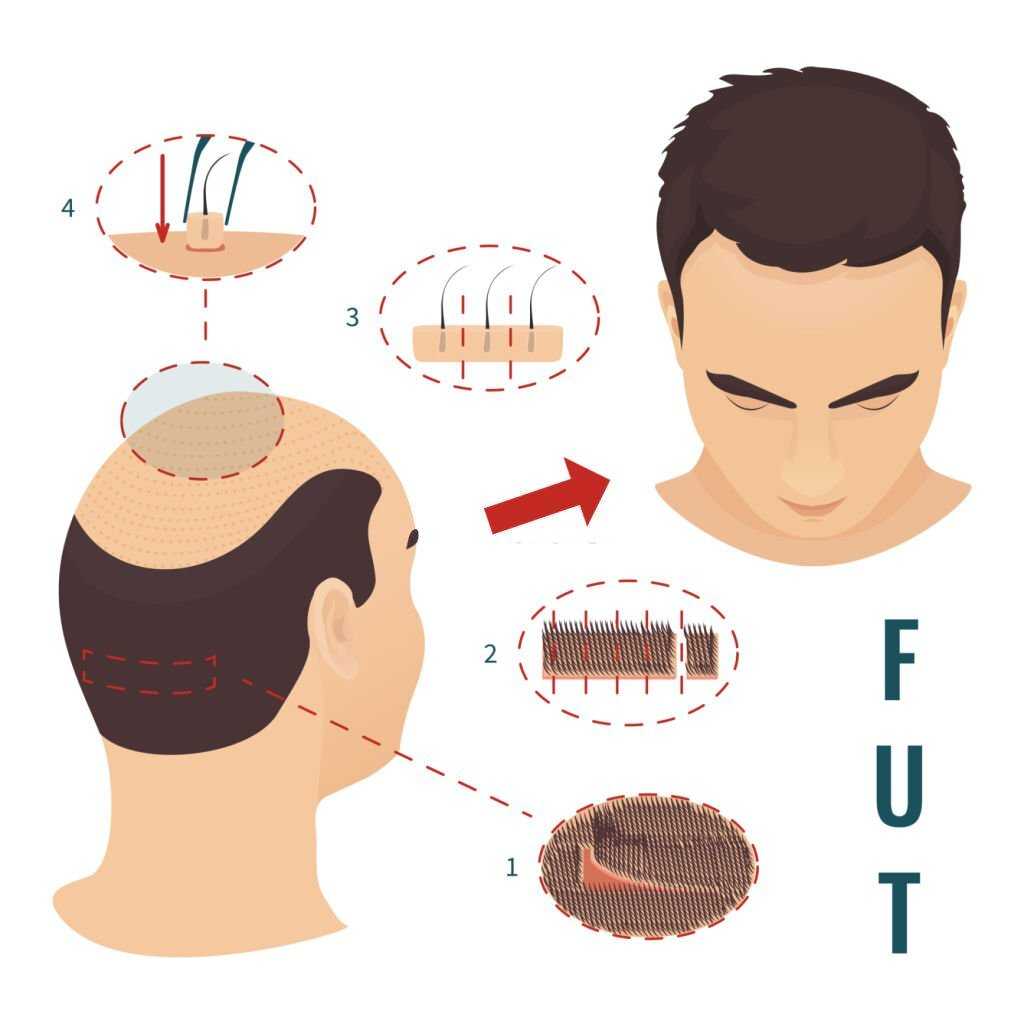
The discrete is not just about to be unknown you’ve ever had it done but how quickly can I return to work. Whichever technique you use when you make the incisions on the top of the scalp and plant the grafts you get a small amount of scabbing and crusting which can be variable but lasts about 7 to 10 days.
With the FUT the scar and the sutures disappear immediately under the surrounding hair that’s a big comfort for the patients.
What we’re saying is that if with FUT we only shave the strip what we’re taking away and then we cut that up and we sew the ends together so long hair makes long hair.
If someone’s walking behind you or when you’re walking out of a theater they shouldn’t know that you’ve had anything done because if everything’s closed up you shouldn’t really see anything at the back of the head.
- Number of grafts
The third thing that we would talk about is the number of grafts. Because it comes back down to FUE what you’re doing is you’re cherry-picking or you’re taking the grafts you’re picking grafts from an area randomly scattering them over from a large area.
When you take that graft out nothing grows back in its place it leaves a dot-like scar. What you’re doing is you’re reducing the density of the hair at the back of the head. With strip surgery, you’re not doing that you’re removing 100% of the density from the back of the head.
Why is this a problem in FUE?
Is because if you’ve got a lot of balding and you need a larger number of grafts then the harvest has to become bigger and the amount that you reduce the density at the back of their head also becomes higher.
Sometimes you need 3000 to 3500 hairs. The higher the harvest the more the risk that you have of the back of the head becoming sparse and see-through and moth-eaten.
A lot of sometimes I also recommend, if someone who requires a higher harvest then I’s sort of more inclined to say maybe strip is a better option for you because it doesn’t have that issue.
If you are a patient with finer hair on the back of your scalp and a lower density of hairs on the back of the scalp then the ability to use FUE becomes tricky because you don’t want to create a see-through look.
if we’ve got people with coarse dense hair on the back of the scalp then you have to take a lot of hair out before that would become a problem. Not if you have fine hair with low density.
- Lage hair harvesting
Large harvest is an advantage with FUT the strip because if you’ve got enough scalp flexibility everybody can do a large harvest without having a negative impact in terms of the density of the surrounding hairs.
Cons of FUT in hair transplant surgery
- Linear scar
There is a misinformation campaign about FUE that it is scarless or minimally visible that’s potentially true that is minimally visible it’s not true that scarless.
The secret to success in using FUE is how you distribute the scars so that they become less visible.
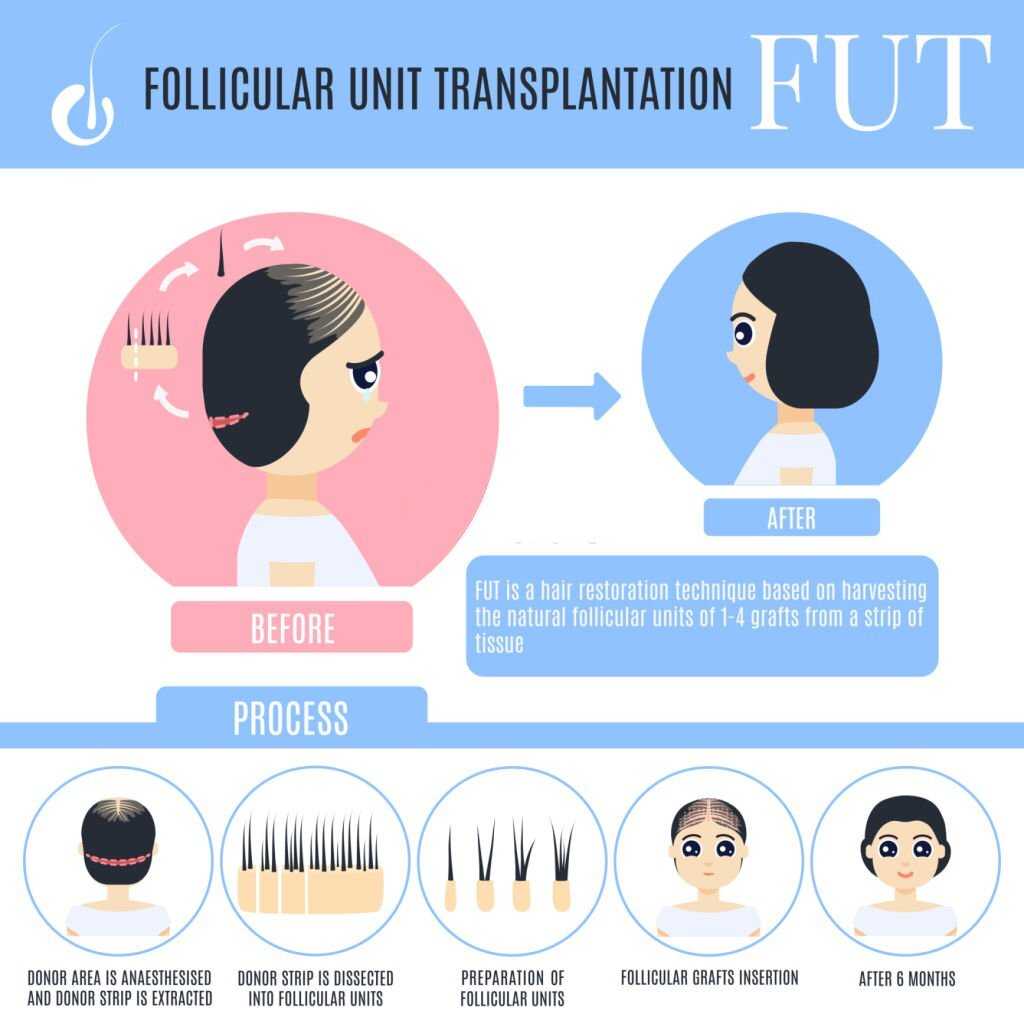
We also know that 80% of our FUT patients are strip scars because we do this closure where we overlap the edges of the trike a fitted closure that we’ve talked about before, hair grows back through the skyline, and for most people, they can wear a number 2 or a number 3 haircut and nobody will be any other wiser and that’s probably true in over 80% of patients. But it’s not showing 100% of patients.
If you look on the internet with people who are trying to convince you that FUT it’s bad surgery they’ll show you some bad scars.
The worst scars that exist on the internet are bad surgery. It doesn’t make the technique bad which means the application of the technique was done poorly.
It is also true that even the best of hands men and women can have scarring on the back that is less than ideal. It’s not 1 to 2 millimeters they might stretch up to 3 or 4 millimeters wide. They usually don’t get overgrown and raised but occasionally they do and they can be treated as well.
Anytime we cut the skin we’re asking the body’s healing process to begin doing its job and not everybody heals the same way.
Yes, a linear scar is what you get from a strip and it can go from ear to ear but it could be either 1 millimeter or it can be 2 to 4 millimeters. If it gets past 5 millimeters that means too much tissue has been taken and there’s been too much tension on the wound edge and that’s made the scar stretch.
Once it’s past 5 millimeters that’s bad surgery. Strangely it’s a bigger fear for men than it is for women. For women, they’re not going to shave their heads postoperatively anyway as long as we don’t put it in a visible area for that matter where their hair is up they aren’t worried at all about the strip scar.
But men because they want to retain flexibility of styling they say to me:
What happens if I lose more hair and I just want to give up so I want to shave my head? If I shave my head there’s going to be a linear scar on the back of the head?
Doctor: I say to them well the thing to consider here is surgery has its advantages and its disadvantages and you better be clear about what you’re letting yourself in for. Because if you do a hair transplant you are going to have consequences, which are scarring on the back of the head and grafts on the top of the head if you give up on the process in 5 or 10 years' time because the baldness has expanded away from your grafts and you shave your head that’s still going to look weird.
If you shave your head you can have scarring on the back of the head so you want to be pretty committed to the idea that you want to keep the hair on your head if you’re going to go down the surgical path.
It’s not some magical treatment when patients come and say look it’s permanent I need to do it once in my lifetime I want to do surgery.
Warning!
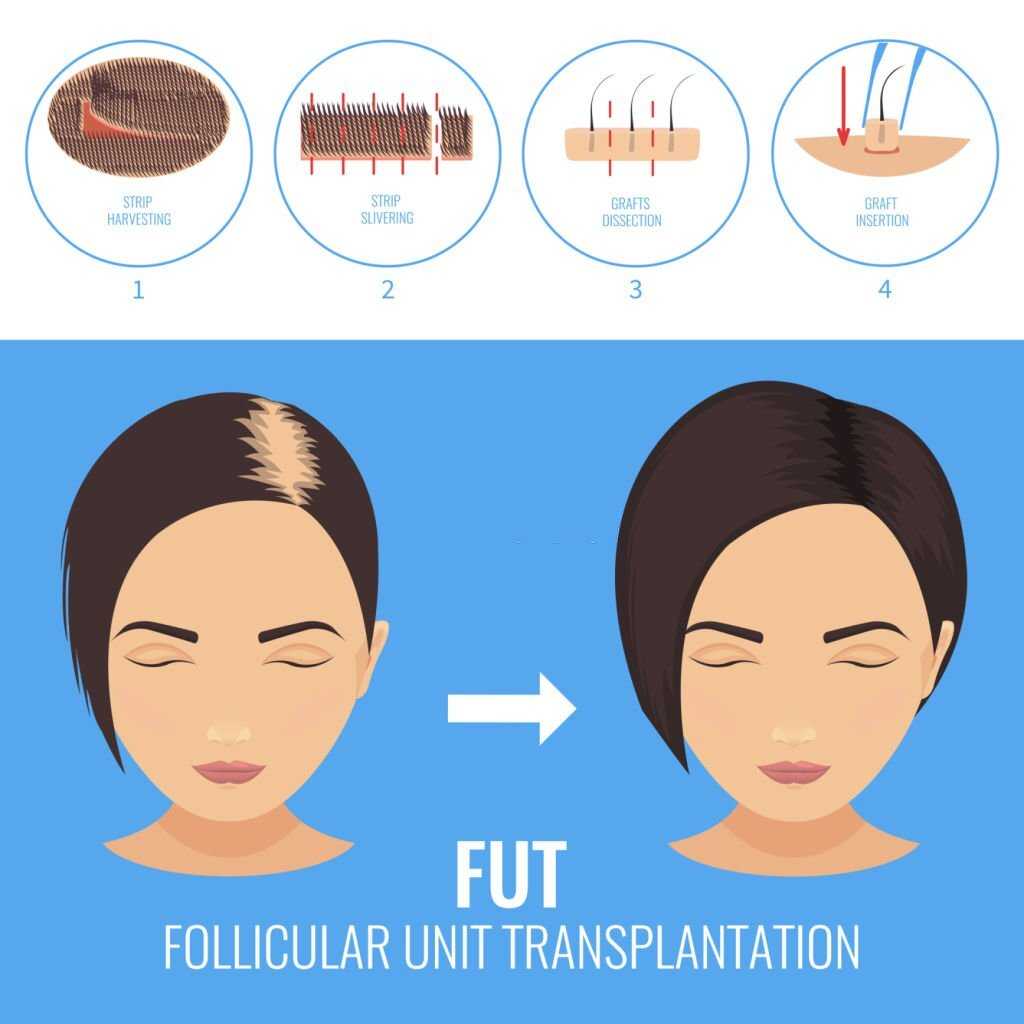
We have to dispel those myths right there’s no such thing as people who are necessary to have one surgery and never lose any more hair and be able to do all of the flexibility of styling they like. It’s a little bit more complicated than that.
Yes FUT creates a linear scar for most people it’s not a problem and most men don’t care. But ironically the people that will care the most are the patients who probably should have strip surgery which is the young extensively balding man.
That’s the guy we want to offer strip to give him safe grafts that will grow from the safe donor area yet his concern is he’s going to have a scar.
A lot of the propaganda or a lot of the information I should say on the Internet I mean most people who have operated have great scars. It’s only people that had bad scars that will go: Oh look this is the problem. Generally, it’s from overharvesting.
The point that I probably want to sort is that we all recognize when we’re doing strip surgery that you are going to be left with a scar.
We counsel our patients on anything: If you want to wear a shaved head then you’re probably going to see the scar but even if you’re not if you prepare to have longer hair you’ve got to accept the scar.
How can we hide the scar left from the FUT transplant?
Even if there is a slight problem with the scar we do have backup options of how we can manage that. There are a few ways that we can do it.
We can always cut the scar out. We can put a little dot-like tattoo and scalp micro pigmentation into the scar to break up that illusion of hair, no hair in the scar, and then hair.
The other option is to actually do an FUE procedure. If you want and put a few graphs into the scar. Scars take up grafts really well.
There are a lot of options there to mitigate the downside which really the only downside of strip surgery is the scar.
- Pain and Recovery
The other con of FUT that people talk about is pain. The other argument is that strip surgery is a lot more painful than FUE surgery.
The irony of this is that we have patients that have had both these techniques done because we offer both these techniques and there is no universal answer as to who gets the most pain doing what.
We’ve got patients who had FUE and FUT who said FUE is more painful, we’ve had patients that hat said FUT was more painful.
One of the things about FUT that might make the surgeon more painful is the very large harvest taking a lot of tissue out and putting tension on the wound edge. That tension on the wound edge and the tightening of the scalp from a very large harvest can be what is a pain discriminating factor and cause people discomfort.
How wide does the scar going to be?
If we have to take out a large number of grafts it’s in the patient’s interest both for the way the scar is likely to heal. In the worst case, the scar is going to be 2 millimeters large.
From a pain, perspective takes a longer narrower strip and has no tension on the wound edge. Rather than take a smaller strip with a greater width in it which is going to put more tension on the wound edge.
The take-home message
We want to create no tension on the wound edge so we would prefer a longer narrower scar rather than a shorter feather scar that fits right into the pain and recovery process.
If you’ve got people with poor healing of donor scars that are invariably from taking too much tissue and putting too much wind tension on it.
These problems can be avoided with good design and good execution of strip surgery. This pretty much takes you through what most people worried about when they look on the internet.
Yes, there are pluses and of course, everything has minuses. This is the introduction to our explanation of how we talk to our patients about the benefits versus the costs are doing strip surgery.


