

How Many Hair Transplants Can You Have?


How Many Hair Transplants Can You Have?
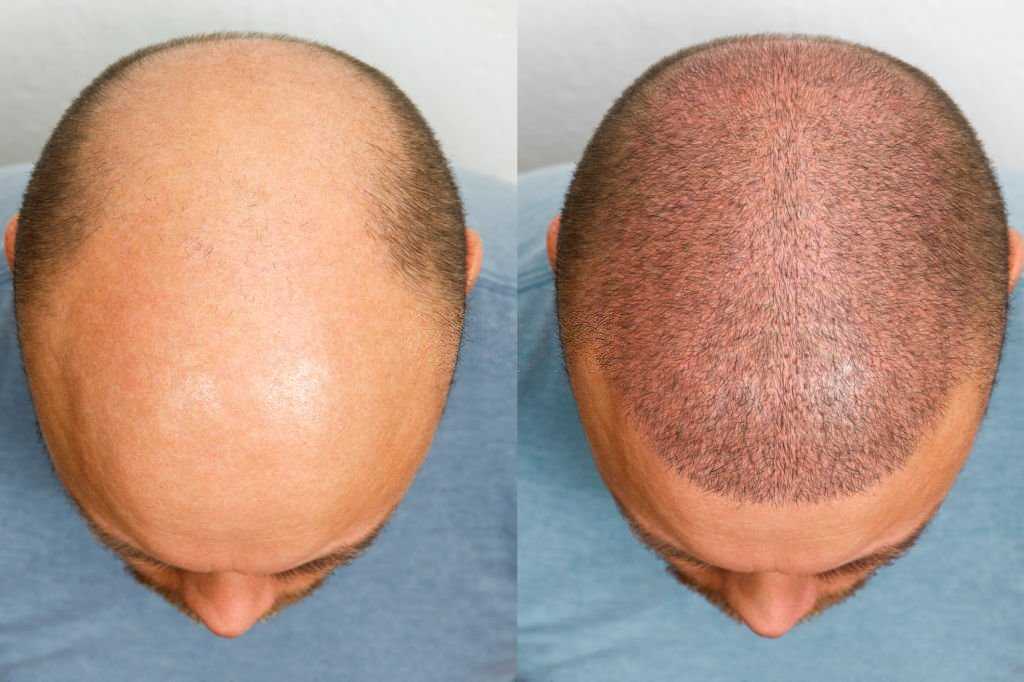
Today we will explain and break down that answer and discuss all of the implications of having multiple surgeries.
How many hair transplants can I have, a question that we get asked a lot. It’s a really interesting question and then there’s a multitude of factors really.
Everything comes down to when you start the process. It’s not about the number of surgeries. When you’re having a hair transplant you are limited, your limitation currently is the amount of donor’s hair that you have.
Because the hair transplant in essence is we are taking hair from one part of the scalp usually from the back of your head and we’re moving into another part of the scalp, to the front head.
This part of the scalp at the back is different and the hairs act differently and don’t respond as much to the DHT levels so they will continue to grow. So we’re moving that hair, we’re changing the geography of that hair from one part of the scalp to another.
The answer to how many operations you can have is if you are doing small operations then sure you can have a multitude of surgeries but if you are doing larger procedures then you’re limited by the number of grafts that you have available.
How many grafts you have available is also dependent on a multitude of factors. So let’s just let’s cover a couple of points.
There is no hair multiplication technology
I’m sorry to tell you this but there is really currently no proven technology for hair multiplication. It doesn’t exist at all. I don’t know why people use that terminology, it doesn’t exist so do not even think that’s possible to increase the number of donor hairs you have. In fact, the reverse is true.
Area versus density trade-off
The number of donor hairs that I can see in a 25-year-old will usually be less than the number of donor's hairs I can see in a 50-year-old patient.
Because the balder you are the less the remaining hair that you can use as donor’s hair. So we then get this area versus density trade-off situation. Can I treat everything in a satisfactory manner because it’s such a big area and I don’t have that many donors?
There is a situation where we actually turn patients away from surgery because the extent of the baldness is so great and the amount of remaining hair that you can safely use as a donor is so small it’s just inappropriate to offer surgery at all.
This is not common, this is uncommon but it exists. So you’ve got to understand it’s about the degree of balding that will determine the number of grafts that can be harvested.
What is a typical lifetime hair graft supply for most patients?
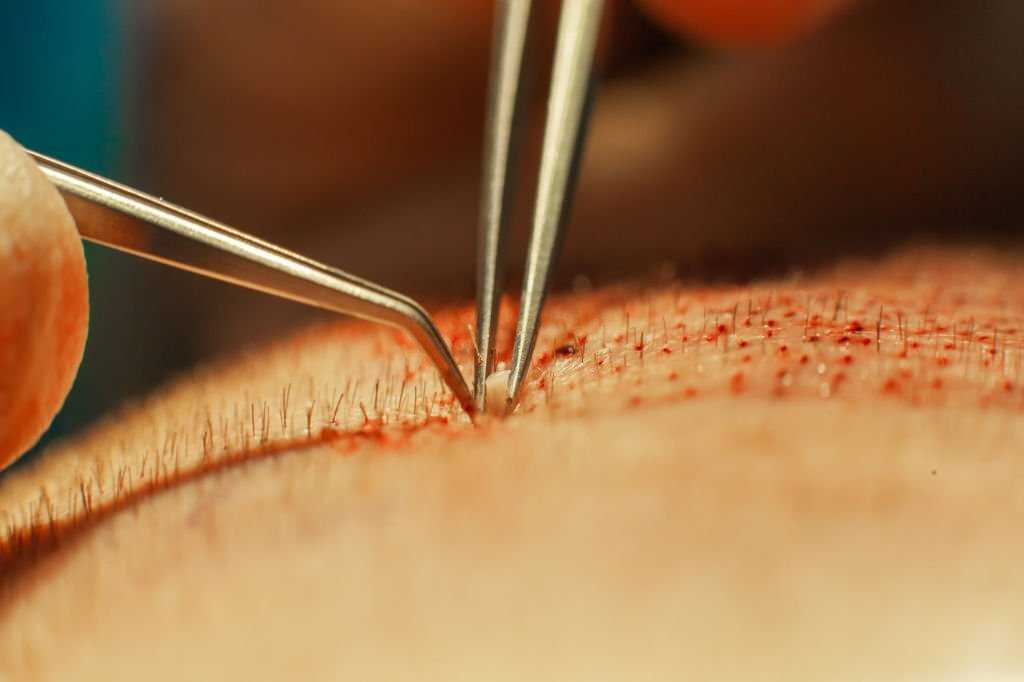
The answer is in the 6,000 to 9,000 grafts range. If you’re having 500 or 1000 grafts then you can do multiple operations, at that level before moving near close to exhausting it.
The bank analogy that we used previously in a previous post really applies here. You have a donor bank and that bank has to last you a lifetime.
A 60 year old coming in and are requesting a hair transplant is a different patient from a 25-year-old coming in to ask for a hair transplant because it’s a different philosophy of what a lifetime supply is going to need to be to keep the patient happy if they keep progressing their hair loss.
So think the numbers 6,000 to 9,000 about an average, obviously, there are exceptions both ways on that some have less some have more.
Be careful of deceptive advertising
But one of the things I’m very very worried about and disappointed about at the moment is that there are many clinics around the world that seem to think that offering more grafts per session, so those ads makes it a more attractive proposition for you to get a hair transplant.
For example, we get thousands of ads now for 5,000 grafts in a single session. Think about that, if you were the guy that was going to have 6,000 graphs available to you in your lifetime.
You are 25 years of age, you’ve gone to the clinic, you said I’m going to give you 5,000 grafts. You are taking a punt you are not thinking about the long-term consequences of that decision you made.
Clinics want your money

Most clinics are not interested in you as a long-term patient or long-term partner in your hair loss journey. If you are careful you can tell by that statement alone, you can tell that they are just focusing on the here and now it will charge you for that expensive hair transplant of 5,000 grafts and then get you out of the door, and then you’re someone else’s problem.
Not thinking long-term is a problem because if you’ve only got 1,000 grafts left for the rest of your life and they’ve wasted all your grafts when it is not necessary.
Again remember the lifetime supply declines with age because your hair is declining with age as part of aging and it declines as your baldness progresses.
So this is a plea for conservative planning, the younger the patient the more conservative you’ve got to be because you don’t know what the future is going to hold.
- Firstly you don’t know whether the patient will stay on their medication for the rest of their life.
- You don’t know whether it will completely control their hair loss for the rest of their life.
- If you’re thinking about long-term planning it leads you to a more conservative viewpoint.
When we look at having a hair transplant most people do is focus on what we called the recipient area. That is the area that you’ve got that looks a little bit thin, looks a bit bald and you want to fill that area up.
The key there, and that one of the key aspects to answering this question is not just how much will it take to fill the front scalp area but how is the back of the scalp is going to look at the end as well.
We have to be careful to not transfer the baldness to the front area. You do not want to sacrifice the front area of the scalp is good for the back area of the scalp being looked all threadbare and moth-eaten.
Skin color and hair color
There are also other factors that influence it as well. Skin color and hair color. If you’ve got a large differential between skin and hair so someone with really pale skin and dark hair, removing 3,000 or 4,000 grafts is going to give you a very different look than if you’ve got someone who’s got light skin and white hair that’s gonna be looking a lot less of an issue at their back.
In the recipient area, I had a patient who came in last week he was in the early 30s, with a little bit of thinning in the crown. He’s a guy that shall we say has done a lot of research.
Do you do 50 graphs per square centimeter?
I said it depends upon the degree of balding. If you have a small issue in a highly important area visually that needs that amount of grafting, then yes you would do up to 50 grafts per square centimeter in that area.
But we’re talking about a mildly thinning crown, so all I’m going to do is fill the gaps. I’m not going to put 50 grafts per square centimeter in because some clinic boasts that they can do it.
You put the appropriate number of grafts or what you see in front of you. I don’t want to damage the existing here in the crown by transplanting over the top of it, I want to transplant into the gaps. So the number becomes less relevant than the philosophy of the plan which is to fill it get the result that you want.
Do not be obsessed with numbers people because we are going for visual density. If you think about the consequence while I talk about the area versus density trade-off.
The bigger the bald area the less hair we have to play with it. that means less overall density we can achieve if we’re trying to get an even spread. What we’re looking for is the visual density which is the minimum density that the patient would find acceptable in their life.
Yes, we could put more in but then we’re wasting a valuable resource in case we need it later on. So my philosophy is we do what is the minimum amount that will get the patient to the visual density that makes them happy.
That doesn’t have to be a specific number it has to be a look because we cannot, until we can grow new hairs we cannot do 100% density over the entire scalp.
Take home message
The takeaway is don’t think of this question as an exact number of operations and say I can have four or five operations, that’s not the key.
The key is to think, can I get the coverage that I’m hoping for or expect from a particular operation and how much does that impact my donor area, and what is the trade-off in that.
Do I have a plan that is in a place where it will stand whatever hairline I create or density it will last, it will stand the test of time as I age going forward?
That’s the truth, it’s a complicated subject it doesn’t reduce yourself to simple mathematical models and that’s really the point of what we’re trying to say here.


