

Is FUE the best option for a hair transplant?


Is FUE the best option for a hair transplant?
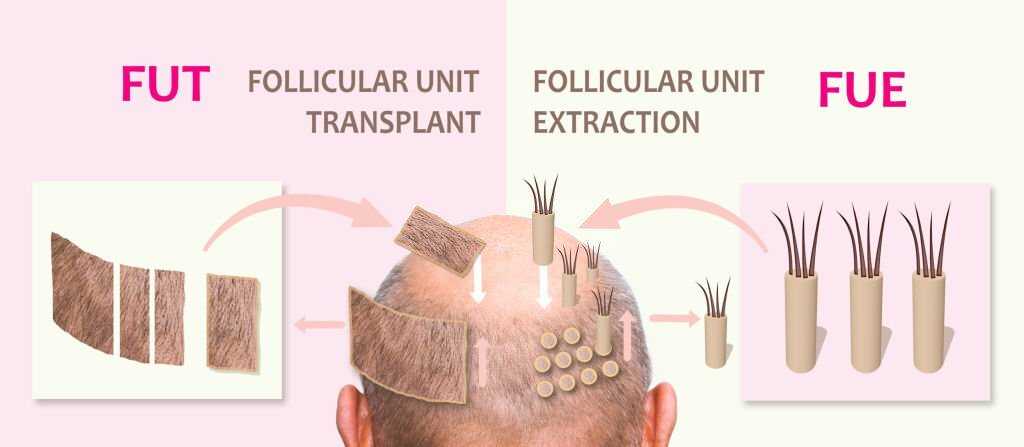
Today we will explain the role of strip surgery or FUT in hair restoration surgery. Does FUT still have a place and is it still being used?
If you surf the internet gives that FUE is the way of the future. If you look at it statistically more than 50% of the operations in the world today are being done by FUE and if the trend line that we’re seeing continues then FUT could die out as a surgery.
We really want our readers to understand today that I go to conferences a year in a year out and have been doing that for a long time.
We still prefer to practice with both that technical solution.
That’s not necessarily true for a lot of the younger doctors coming into the field these days, they only learn to do one technique. Therefore the whole of their explanations and the way they talk about how they manage hair loss is based on the fact that they only offer one technique.
I think it’s important that we have started with FUT and then developed our practice our skills in FUE but it’s not because of that it’s we offer both and practice both because we feel that both have their roles to play.
It’s not one or the other we’re not phasing out one and then practicing upscaling in another. There is a place where FUT still is absolutely relevant and there is a place where FUE has a clear-cut advantage as well. So there is actually room for both.
No scarring claimed by the FUE method
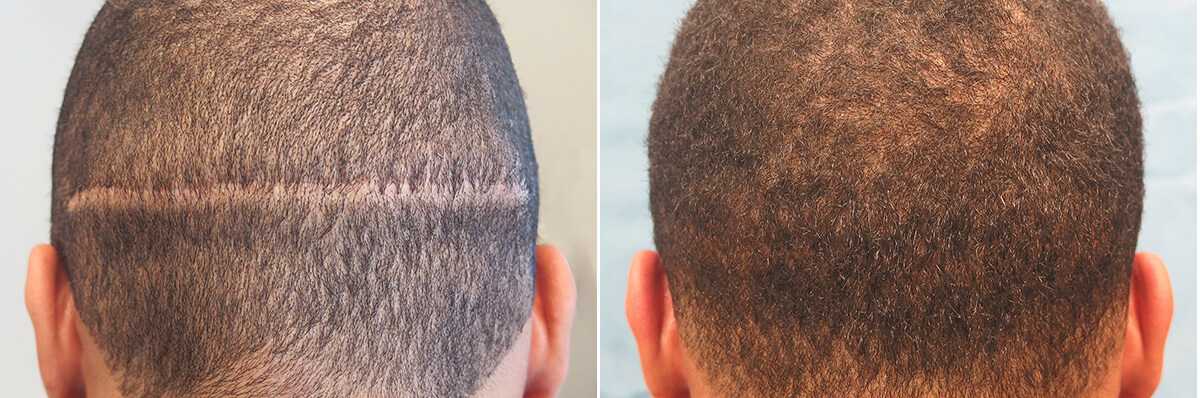
What we’re going to try and do today is give you a balanced view of this question. Historically when FUE started in Australia and in America which is around the late 90s or early 2000 one of the marketing aspects that made a lot of us uncomfortable was this claim of no scarring. This was a huge hook for patients.
The fact is that was an exaggeration of what it was trying to achieve. You can have minimally visible scarring but that’s not the same thing as claiming no scarring.
I would say to all of our readers that you should apply a little bit of skepticism to remarks or comments that you see on certain websites.
That talk in absolute terms about no scarring minimally invasive no discomfort. There is no Universal way that patients react to surgery that allows them to escape pain necessarily, to escape scarring necessarily.
Whether we cut a hole in the back of the scalp to take out a follicular group of hairs which is the FUE technique or whether we cut out an ellipse of skin and sew it together which is the strip technique both of those are full-thickness cuts of the skin. Both of them produce full-thickness scarring.
Ironically if you even though it gives you minimal scarring and it gives you a dot-like scar that is very small and it’s peppered over a large area. If you add all those dots up and calculate the surface area that takes it is probably a factor of 5 to 6 times more surface area of scar tissue in FUE than it is in strip surgery.
The notion of it doesn’t have as much scarring or as minimally is absolutely false. It actually has a lot more scarring the fact that it’s spread out over a larger area and in a dot-like like fashion gives it an appearance of more minimal scarring.
Make the patient fit the operation
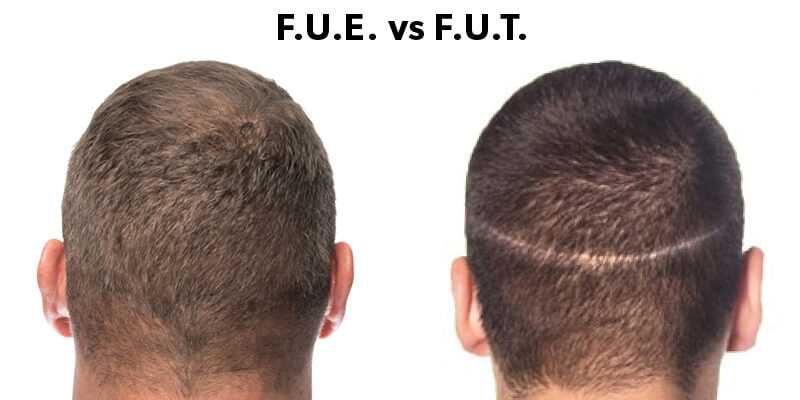
Basically, the thing we want to explain to patients is that if you’re only offered one type of surgery then you’ve got to make the patient fit your operation.
If you only offer one surgery it’s okay to learn one first but if you only learn one surgery ever then all the different variety of patients that come to you you’re making them fit your operation.
The alternative way to think about it is if there are two viable and useful versions of the operation and you learn to do both of them then you can make the operation fit the patient.
In fact, one of the remarkable things that people should think about is that it’s not 100% FUT or 100% FUE it may be that both operations at different times are relevant in the same patient.
You can use both techniques in one patient either sequentially or some searches of the world do them even at the same time because there are there certain advantages to offering both of those techniques even in the one operation.
That’s right so we’ll discuss that in a bit more detail. I think you can get a de nailing the idea from listening to us that we don’t believe that FUT is outdated.
The safe zone (donor area)
At the back of the head is your donor area and there is a balding margin. In FUT we’d be taking the hair from the low area of the scalp where there’s a long way away from the balding margin.
If we’re using FUE because we’re trying to take it in a scatter zone it’s a much larger area we’re harvesting. For small operations, this doesn’t matter for patients with small baldness areas this doesn’t matter either technique is fine.
Why are we worried about this back donor area?
If you have a patient that has just a little bit of recession in the front and nothing in the crown and there’s no sign of anything in the crown then the argument is largely academic.
But once you start to lose hair in this area on the back of the scalp the crown area becomes a potential problem. Because over time not only does the area become thinner but in most patients, the area becomes larger. The way it becomes larger as it goes out at both sides and down at the back.
This is where we run into problems because if we have a 25-year-old patient and it already has some thinning in the crown we don’t know how low that might dip over the next 20 years.
Problems with the hair transplant
In the area near the crown as the balding margin dipped down to the safe zone. If your strips are down the safe zone it’s got to go a long way to be any problem.
If you’re doing FUE in a patient that has crown balding as well as frontal balding what that requires is a large number of grafts. A large number of grafts means a large number of harvests over a larger area on the back of the head.
This is where we run into the risk of harvesting an area that looks okay today but in 5 or 10 years’ time has started to thin as part of the balding margin drifts down. That has a double negative effect.
The natural progression of hair loss
Firstly any dot scars (remember we said there’s no such thing as no scarring) suddenly become exposed because there are no hairs around them to cover them up. Which is one of the normal ways we have the advantage of minimally visible scarring.
The second problem is wherever you put that graft that you have taken from the back near the crown that’s just balled it out. So your permanent transplant became a temporary transplant.
This is a huge problem that will develop over the next 10 or 15 years in our field. Because we see so many people ignoring this basic understanding of the natural progression of hair loss.
Planning the donor's hair is a must
- Do we have to think about when we make this plan about how we’re going to use the donor’s hair?
- How do we get the most benefit to the patient over the longest period of time?
Because these hairs at the back of the scalp are permanently transferred. We don’t grow new hairs to replace them. If there was no change in your boarding appearance every time you operate you’re reducing the amount of hair on the back of your head.
If you are balding in the crown and coming down into your donor area then you have a reducing donor area that’s safe to use over time.
These facts just so often get overlooked or glossed over when people are doing their consultations with young men. This is the critical factor that you have to think about in a long timeline. This is what I’m seeing today, what do I think I’m gonna see in 20 years’ time and what’s the best thing for this patient.
This is the problem because even if you’ve got a little bit of balding in the crown and this is the margin no one knows where it’s gonna end. We don’t know the patient doesn’t know.
I see a lot of times patients say:
I know because my father, my uncle has only lost this much hair so I think this is where it’s gonna end. That’s not true, we don’t know when it’s gonna end.
If you looking to harvest right up to the margin which you’re gonna have to do if you trying to get a large harvest then you run the risk of that transplant being a semi-permanent thing.
Because these grafts are destined to fall out in the future, whether you’re taking medication over a long time. It still doesn’t guarantee if these are genetically determined to fall out then they gonna fall out.
What is the safe zone in hair transplant?
The key known as the sweet spot low down at the back of your scalp is the area where you are pretty much guaranteed that you’re gonna be safe. That’s why we call it the safe zone because you’re safe.
The assumption is that if you take those grafts from that area and transplant it the patient’s gonna be with it with them for the rest of their lives.
What’s it going to look like in 20 years' time what’s the worst thing that can happen?
They could lose hair from the front to the crown down to the back of the scalp. For a patient in their late-20s the safest thing to do to, give him the most long-term result is to take the hairs from what we would call the safer zone down using a strip.
If the baldness progresses over the next 10, 15, or 20 years if this margin creeps down when he comes back at that stage we’ve got a better idea of what the pattern started to look like.
And we can, if we decide, we can do another strip or maybe we would swap to FUE. Then we can just design how we’re going to use the planning of the zone of the donor area with FUE to be more effective for the patient.
The other thing that we should remember is that we’re increasingly seeing patients bald from the neck up we call this anterograde or retrograde alopecia.
That means the hair margin is creeping down at the top and creeping up from the bottom. Again there is only this small area in that patient that’s going to have safe hairs.
The bottom line of what we’re trying to say is the younger the patient that has balding ground the more should be worried about what the progression of the hair loss is going to do to our donor area. And how that should affect or will reflect our decision-making as to how we take the safest hairs they’re going to last the longest to give the patient the longest benefit.
Quite commonly the younger men that are coming in that got quite aggressive forms of male pattern hair loss, that are losing a lot of hair they’re the ones that have done a lot of research and say:
I really want the shorter hairstyle, I really don’t want to have FUT. That population runs the risk of losing significantly more hair over time and causing more problems further down the track. That’s something to think about. That’s certainly from the perspective of the donor’s hair.
How does the transplant impact hair quality?
What we haven’t talked about is the actual hair quality. If you’ve got someone who’s got actually quite fine hair, not very dense hair to begin with.
If you’re starting with an FUE procedure what’s going to happen is you’re going to reduce the density even more and you’re gonna make the donor area look see-through and even more sparse.
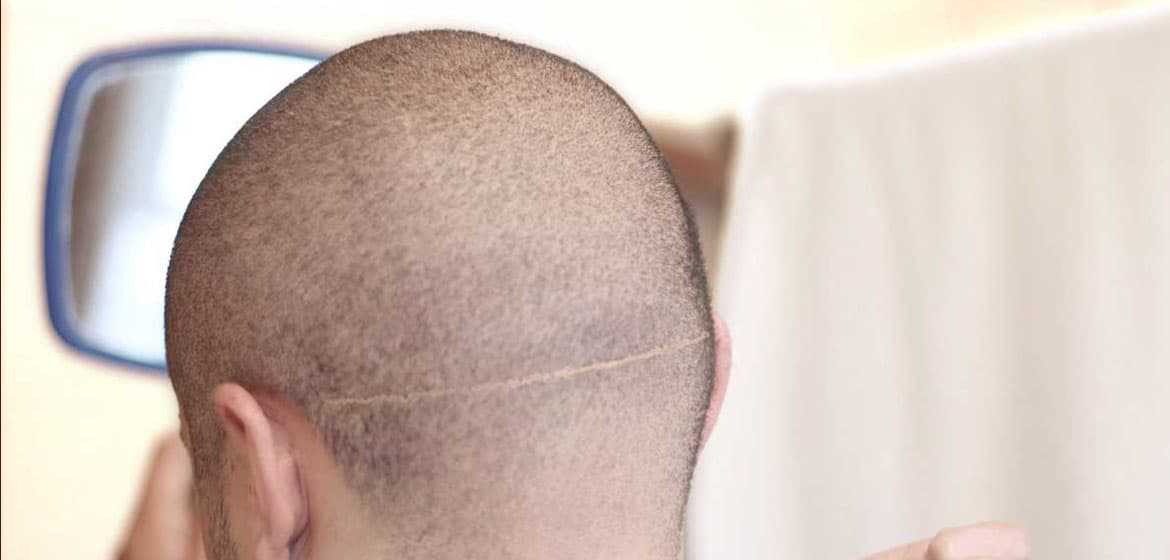
You don’t have that issue with strip because with FUT you’re taking 100% of the grafts from that area you’re sewing it up you’re trying to create a beautifully designed scar where the hairs go over the scar and through the scars called at Rockefeller closure so that anything with a sort of grade 2 or 3 lengths should generally cover the scar beautifully. And you haven’t ostensibly changed the density of hair at the back of the head. It’s a marginal change to the density.
As we age we end up with less hair on our heads in total. And the diameter of the shaft arm decreases as well. If you’ve got borderline low density with fine hair to start with if we could make it look thicker as you get older, we’d better take a lot of factors into consideration when we try and work out what is going to give it the best long-term result for the patient.
Is FUE or FUT the best option in all cases?
The answer is that there is a good role for each of these techniques. In some patients, it doesn’t matter at all. But in other patients, we would lean towards the safety and longevity of the result by choosing a technique that is going to be in the patient’s long-term interests.
Not succumb to the marketing frenzy that’s out there on the internet that suggests that this technique is only for old dinosaur surgeons who don’t know any and that anybody who is doing a hair transplant said I should be using the newer technique because it creates the beautiful result in every case.
The short answer is there’s no magic for everybody in one solution we have to think about what’s appropriate for each of our patients. I ask them to consider the benefits versus the risks and which techniques they’re going to use.
Everything comes at a cost so you have to look at the relative cost-benefit analysis when you make a decision making. At the end of the day, it’s the patient’s decision. They really need to make a good decision based on good information not based on biased marking-driven information.
What is surgical planning?
Surgical planning is not about what happens in 12 months' time, surgical planning is about what we think is going to happen 10, 15, 20 years down the track and how do we get the best result for the patient by imagining that we’re 10 15 20 years down the track not working in a short timeframe.


