

Hair Loss in Women (Shedding vs Balding)


Hair Loss in Women - Shedding vs Balding
Female hair loss is not very well understood. It affects two-thirds of all women over the age of 50 years. We gonna explain the difference between balding and actual hair shedding, various possible causes of hair loss in women, and how this can be investigated and managed.
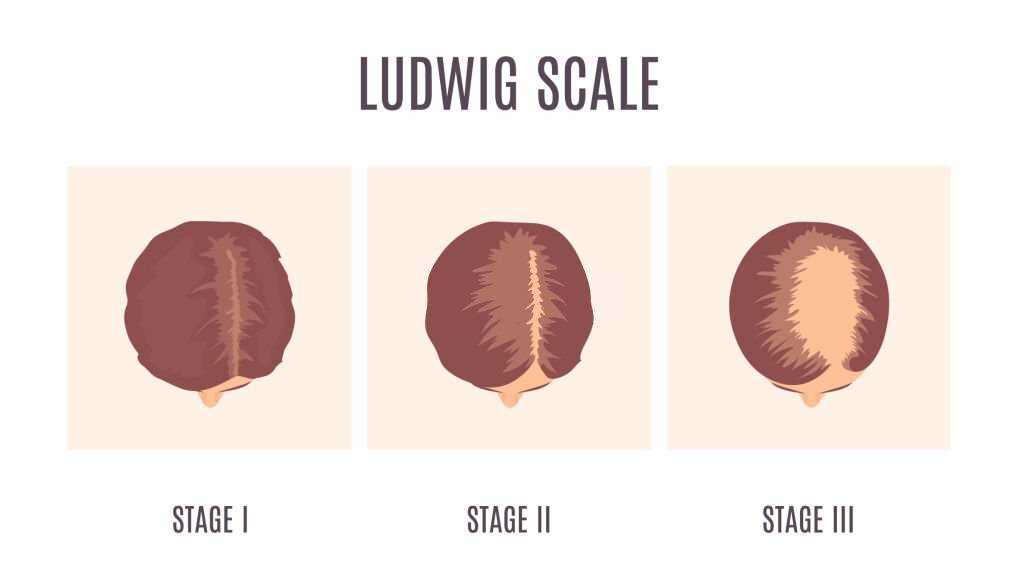
Up till now we’ve been talking about androgenic alopecia and dealing with hair loss in men. Women are the other 50% of the population, they also are very concerned about their hair.
This is a really big thing because hair loss affects women also, two-thirds of women over the age of 50 suffer from some degree of hair loss. So it’s incredibly prevalent and emotionally devastating.
It’s socially acceptable for a guy if they’re losing hair to be fine about it or shave their head but for women, it is absolutely devastating.
What do we mean by hair loss in women?
What we mean by hair loss is not what women see in terms of shedding. Remember women who tend to wear their hair longer are much more aware of shedding than men who wear their hair shorter.
What is shedding in women?
Shedding is just a normal process of hair painlessly falling out of the scalp at the end of the growth cycle.
Then three months later the next cycle begins and they grow new hair and this happens repeatedly throughout life in a random way.
How many hairs do we shed daily?
Depending on the cycle you could average between 50 and 100 hairs per day regarding normal shedding.
Sometimes women go through periods of increased shedding which can be either due to the sea seasons, fevers, change of medication, acute stress, or childbirth which we’ll discuss in a bit more detail.
Or you can have a more generalized problem associated with the thyroid gland where either an underactive or an overactive thyroid or even iron deficiency.
There are a number of things that can cause phases of increased shedding but these normally self-correct us right unless there is a long-term thing going on like thyroid or iron deficiency.
It’s really important to find out if this is a normal process that’s happening because men and women can, we can all lose hair 50 to 100 hairs per day which’s perfectly normal.
f you’ve got longer hair it becomes more obvious because you see a lot more, it's a lot more obvious when you’re having a shower or on the pillow but certainly, if you’re losing long hair that’s probably a good sign because it is a sign that that hair has grown to its full life cycle, it is shed and that’s perfectly normal.
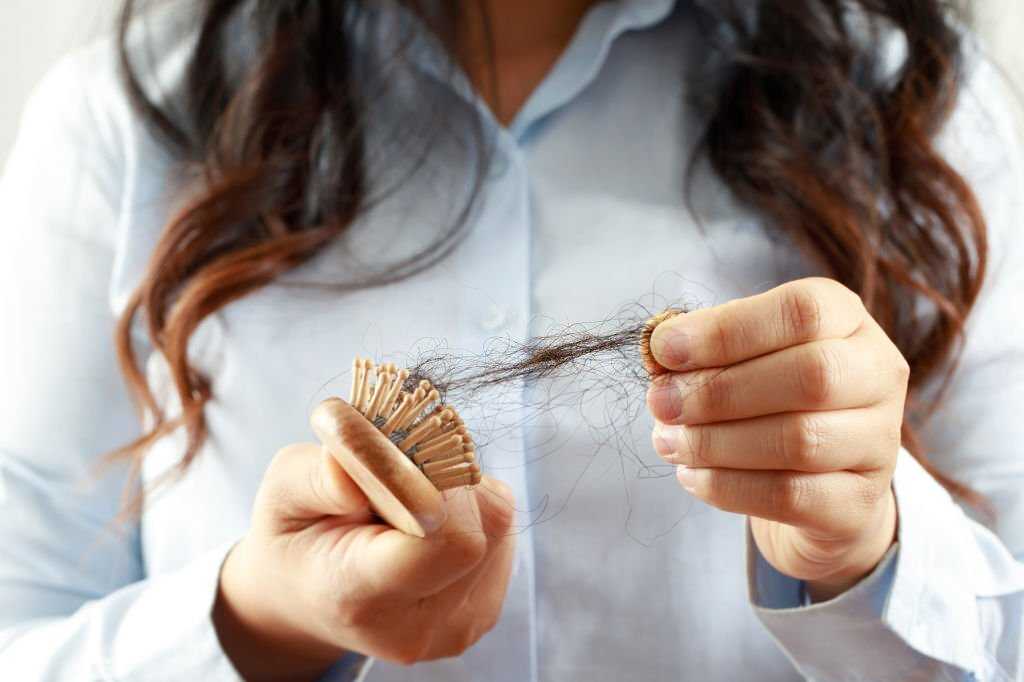
Here’s the other interesting thing. Women go through a phase of increased shedding if they interpret it as hair loss they often have other symptoms like tenderness or burning of the scalp. So that means that there’s what we call an inflammatory component going on at that particular point in time.
What do I need to do about the inflammatory component?
The answer is you can use something that has an anti-inflammatory companion as a shampoo.
So use a shampoo with zinc pyrithione or head and shoulders for example or Ketoconazole Shampoo which is an antifungal anti-inflammatory shampoo so these are particularly good if there’s an inflammatory component going on to use as shampoos in this situation.
The thing to say about this is if you’ve had a fever associated with the flu for example so a stressful episode but again everybody is stressed. The thing to understand is it doesn’t happen after two days or a week it happens two to three months later.
When women come in and say:
I’ve suddenly started increasing my shedding rate.
The first questions we ask are:
Let’s go back a few months and see what changed, did you suddenly lose weight, did you have a fever associated with an infection, did you change medication because that kind of change pennyweights did you have a baby a few months ago. Baby shed that happens because of the hormones.
Blood Test
The other thing that differentiates the way we treat women’s hair loss is that in most of our women we’re going to do blood tests.
Because we want to rule out things. If it’s not an acute shed that’s responding in a couple of months it is going on for longer than three or six months we’re going to investigate that with a blood test. For a man that mostly just comes in with male pattern baldness, we don’t take blood tests.
The right diagnosis
It is about getting the right diagnosis, that’s important because there are so many different reasons as to why if you’re a woman you’re losing hair. That affects the management plan of how you manage this hair loss.
If it is shedding then usually this will settle because the hair sheds and a new hair grows back in its place and there’s not much that needs to be done.
Thyroid
But if there are other issues sometimes it’s very simple, it’s a B12 or an iron deficiency that can be easily corrected. Quite common people have an underactive thyroid we’re seeing a lot more of that these days that people certainly after a certain age they’re at thyroid becomes underactive and you get all the symptoms associated with that. Correcting that can help hair growth.
Malt
The other point about it is if you have an acute increase in shedding which we call malt. You can usually expect a full recovery. If it was a specific cause of the fever the change of medication the change you’re weightless and then once that cause is taken out of the picture you will get a full recovery.
Some women don’t get a full recovery, so what’s happening there?
What is happening in that situation is that you have the shed out and the shed comes back but there was an underlying problem that hadn’t been diagnosed. Maybe a female pattern hair loss.
Sometimes there are two things going on but most doctors like to make one diagnosis, not two diagnoses. so we’re going to look at one diagnosis, to begin with, yes and if you don’t get full recovery then we’re going to investigate why because we are expecting for recovering their situations.
Aging
On top of that, we need to talk about aging. Basically, for both men and women, the most number of hairs they’re going to have on their head isn’t in their early 20s. After that, part of aging is that you’re going to gradually decline the number of hairs on your scalp that will grow and also at some stage the thickness.
At what age your hair starts to shrink?
In men, the diameter or the thickness of the hair starts to diminish gradually from the mid-20s, in women typically starts in the 40s.
There’s a hormonal impact there as well that affects this. It’s a lot to take and it’s and it’s easy to get confused and overwhelmed. We understand that and we know that hair loss is very emotional it’s a huge deal for women.


