

Finasteride and Dutasteride for Male Pattern Hair Loss


Finasteride and Dutasteride for Male Pattern Hair Loss
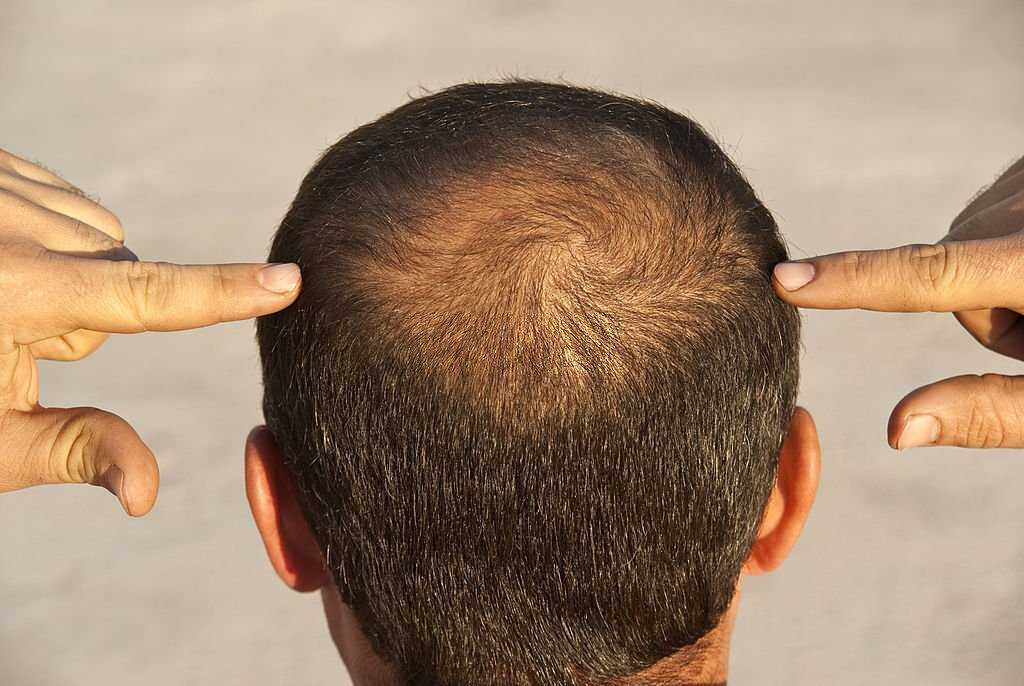
Today we’re going to explain more about the role of using Finasteride and Dutasteride in Male Pattern Hair Loss.
Can we use them both? The upside and the downsides of using both.
How DHT is produced in your system?
Our body converts testosterone in form of DHT more than usual this extensive DHT causes our hair to thin and fall out.
Just a quick recap, in male pattern hair loss, what is happening it’s a hormonal change there’s a genetic component as well but hormonally what is happening is you’ve got hormone testosterone, in the level of the hair follicle.
We’re converting that testosterone into another form of that testosterone called dihydrotestosterone (DHT). There’s an enzyme called the 5-alpha reductase enzyme that does that conversion.
In people that have got a genetic predisposition for hair loss, there’s overactivity of conversion. This 5-alpha reductase is converting more DHT so you will get a large amount of DHT in the system.
If you’ve got a large amount of DHT and the gene then what happens is that causes the hair to thin out sequentially over every lifecycle of the hair. Gradually the hair will thin to a point where it no returns where it falls out and doesn’t grow back.
The difference in hair areas of the scalp
For some unknown reason, the hairs in the upper scalp behave differently from the hairs in the lower scalp. It turns out that the hairs in the upper scalp have got more of the 5-alpha reductase enzyme.
Just to emphasize one critical point: This is not about what’s going on in your bloodstream you don’t have more testosterone or DHT in your bloodstream than the man who’s not balding. What you have is more conversion of the testosterone into DHT within certain hair follicles that are predisposed because they’ve got elevated levels of the enzyme.
When we’re looking at the medical management of male pattern hair loss we’ve got a couple of drugs as well as a lot of medication on the market but we’re going to talk about finasteride.
What is Finasteride?
Finasteride is a drug that blocks the 5-alpha reductase enzyme. If you block that enzyme then you block the conversion of testosterone to dihydrotestosterone.
You effectively lower that in the system certainly at the level of the hair follicles. What we’ve found is that by blocking this enzyme and lowering this level of DHT we can try and halt the progression of this condition.
Finasteride is FDA-approved
It’s an FDA-approved medication. Finasteride has been used or initially was brought out for a treatment treating prostate enlargement. It is now licensed in the 1-milligram dose to treat male pattern hair loss.
Finasteride is a partial block
The other thing I’ve just emphasized is that the DHT is depressed by about 2/3. It’s not a complete block is a partial block.
- The effects of finasteride at 1 year in the trials there were that 86% of men had not deteriorated after one year, that’s highly effective.
- At 2 years was still 83% of men had not deteriorated. In the trial the ones that they measured.
- At the 5-year mark, 64% had not.
This partial block of the 5-alpha reductase enzyme and this lowering of the DHT by about 63% as was measured in the trials, is enough for most people at least for the first couple of years to hang on to it.
This partial block is still allowing people to slowly progress their balding over life. For some people that have the less aggressive versions of balding it’s Finasteride it’s all they’re ever going to need. For the people that are progressing their hair loss despite finasteride that’s when we start to think more creatively.
Dutasteride
It turns out that there is a new medicine that’s been around now for 8 years in Australia called Dutasteride which was also developed as a prostate drug.
What is the difference between Finasteride and Dutasteride?
The difference is, that there turns out to be two major of the 5-alpha reductase enzyme type 1 and type 2. Finasteride blocks type 2 and that’s why we’ve only got the partial block and therefore the partial effect. It turns out that Dutasteride blocks 1 & 2 5-alpha reductase enzymes. So what is 63% for Finasteride becomes about 93% for Dutasteride.
It’s a stronger drug does that mean we would use that all the time?
The short answer is different doctors will give you different opinions but the first thing I need to tell you is this is an off-label use for hair loss.
What I mean is the company did not do hair loss trials to submit the evidence to the FDA in America. Australia gets the license for it to be approved for use for hair loss.
It is an approved use for the prostate it is not approved for hair.
That doesn’t mean it isn’t safe to use it just means they haven’t done the research to go through the regulatory approach.
Yes, it is potentially a better drug for some patients because it’s a more powerful drug. One way to think about it is that we would ordinarily in most patients start with Finasteride because we know that for most patients that’s going to work really well.
We see patients using Finasteride that is not quite hanging on to the hair. The hair loss is still progressing then we start to think about whether we need to do something a little bit extra to try so we can get that control back. That little bit extra would be Dutasteride.
More is not better
The thing to remember about it is that more is not necessarily better because for both of these tablets that are available in the marketplace they last a long time in your system.
- Typically what I do sometimes is I leave them on a small dose of Finasteride and I add maybe one Dutasteride a week because it lasts longer than a month in the system anyway.
- I add one Dutasteride a week to see if I can get control.
I guess the philosophy that we’re trying to achieve here is to use the lowest doses we can customize to the patient that gives them the stability or improvement that that’s possible and prevent further hair loss.
Do not overdose on Dutasteride
We don’t want to overdose on them because if we give them more the doesn’t necessarily give them a better outcome but it gives them a greater chance of getting side effects.
This Dutasteride is available in Australia like Finasteride but it’s not the immediate go-to for people for doing hair loss. I want to start mostly using Finasteride and wonder whether I would need to use Dutasteride if either the patient or I wasn’t happy with the outcome from Finasteride.
Should you go straight to Dutasteride?
The short answer is we only do it if there’s an aggressive version of balding going on. 14% of men at one year that was in the trial lost ground, that’s the 14% I’m thinking about not the 86% so I’m wondering if this patient going to be one of that 14%. If I really think there’s a good chance this patient is going to be one of the 14% and aren’t stable I’ll introduce it immediately.
It’s a long-acting drug I may not do it on a daily basis but I really think if I see a 16-year-old with a lot of hair loss beginning I’m really doubtful as to whether using Finasteride is going to be enough for that patient. Again it’s kind of like customizing my treatment plan to the patient not making the patient fit into my treatment plan.
If I’m thinking about the guys that 14% at one year that 17%, they are, 1 in 6, 1 in 7 of the patients aren’t going to be stabilized on Finasteride alone then I’m going to decide whether I’m going to combine them or whether in the extreme circumstances they are gonna go straight to Dutasteride.
The number of patients I have in my practice that are using Dutasteride alone is probably 1%. This is really not a very common occurrence in my practice and I’ll use it as a stand-alone. But in maybe 5% to 10% of my patients, I had added into the Finasteride if they’re very slowly progressing their hair loss over time.
Take-Home Message
The take-home message from there is that there are multiple medications on the market but what I would say is that there’s no cookie-cutter approach to the hair loss thing.
You need to be assessed and you need to have that sort of being able to be fluid enough in your decision-making to be on the right track.
If you are losing hair make sure you do get advice from someone who’s qualified to give you that advice and will give you the best form of that advice in that decision-making process.
The reality is if you go to a clinic for a hair transplant and you’re not talking to a doctor who’s going to talk about these options for you. Or you’re talking to someone about the benefit of hair transplantation, then this is all going to be skipped over.
Important medical approach

You need to understand that there is a medical approach that if you can reduce future hair loss and in some cases combine it with surgery that’s going to give you the best long-term result.
If you skip this step while you’re going to be initially potentially very happy with the transplant in a couple of years’ time you may have very big regrets about the fact that you didn’t think about the whole approach long-term approach to balding.
When you’ve got baldness coming away from the grafted areas and getting the halos of development this is a really critical part of the decision-making for our patients about how they’re going to manage things in the long return.
It’s not that you have to take the drugs that will be your decision. You need to have a conversation you need to hear some balanced facts about it and then make up your own minds that you’ll really the risks of both using the medicine which is minimal and the risks of not using the medicine.
I will give you an example:
Last week I saw someone who came in and I was their number 5 among the people that they went to see and the conversation actually went over a long period of time because we spent a long time talking about this.
And they said this is brand new information! 4 other people had talked about it including doctors but had skipped over this entire process. This is essential it is really important this is the first thing that we talk about it. We need to understand what causes baldness, what the potential medical remedies are, and where the surgical remedy may fit into the process.
I hope this has clarified this decision making and we are not going to spend a lot of time in future posts talking about medicines under development because the reality is we don’t have enough clinical information to give you good advice about it.
I would say to you that doctors can write prescriptions for these because they’re both prescription medicines they have got a credible historical trial-based background to them and that’s what you’re looking for.
You’re looking for credible information on properly controlled trials before you spend your hard-earned dollars on trying to control your hair loss. There’s a lot of other stuff that’s being advertised out there at the moment that is under investigation. Even though people are very keen to try these things because they’re in a state of panic and they’re wanting to do it. Really we need to make good decisions based on good information.


