

Different FUE Technologies (ARTAS, Smartgraft, and Neo-graft)


Different FUE Technologies (ARTAS, Smartgraft, and Neo-graft)
Today will gonna discuss different FUE devices or technologies that are also advertised on the market. In essence, what do they do, what the differences are, and what are the implications.
What is an FUE hair transplant?
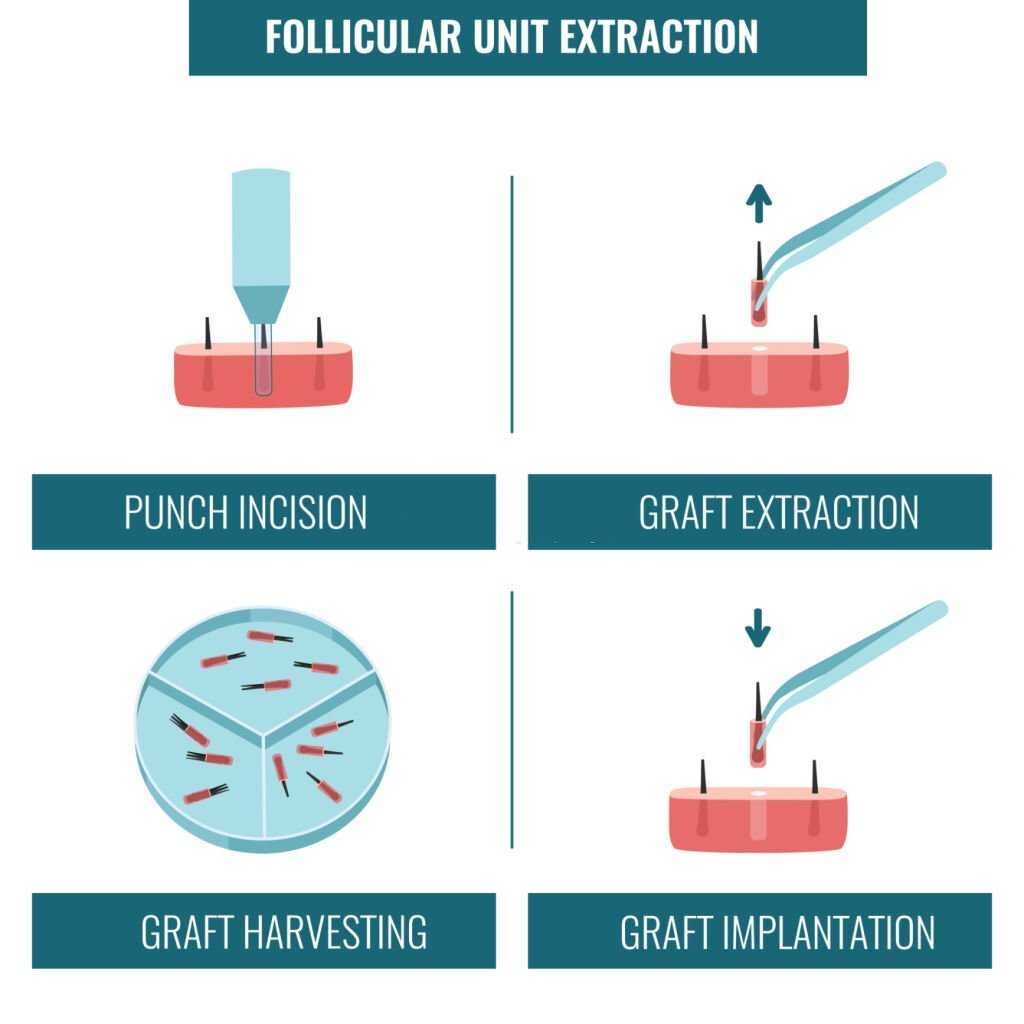
There’s a lot of information on the internet, there’s a lot of marketing information about a variety of different products or machines that can be used. Essentially they’re all doing exactly the same thing they’re all offering FUE. With a motorized punch out each individual graft which creates a small scar in its place where you’re extracting that graph one by one and planting it.
What motorized FUE machines do?
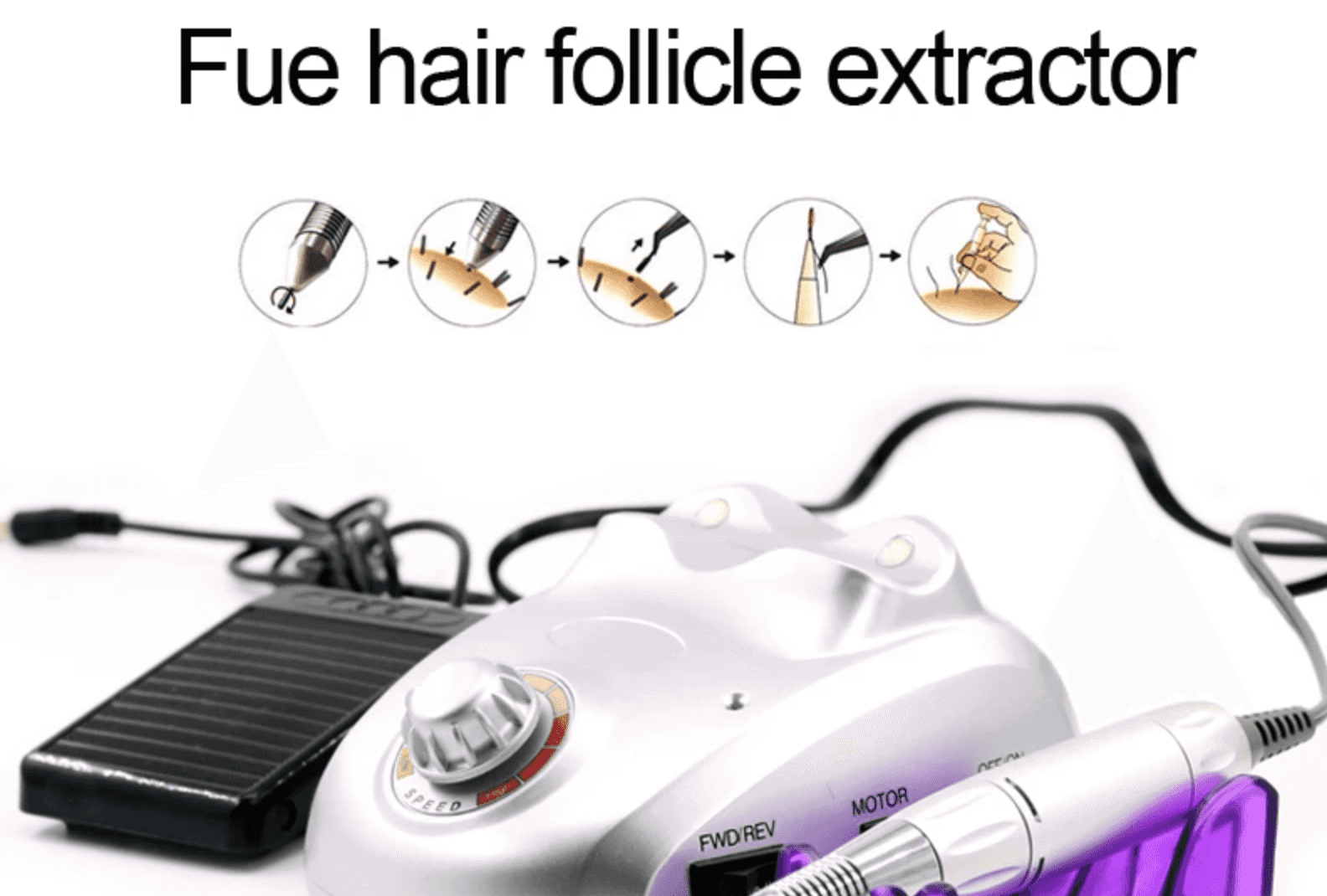
Most FUE surgeons are using a motorized handpiece and there’s been a lot of change in technology regarding the structure and of the punch. What we’re doing with that is just punching out each graft one at a time. That’s changed a lot over the last few years.
The recent technology update
What’s happened in recent years is that companies have moved into space and they’ve started heavily marking their own machines. There’s no problem with these machines being in the marketplace but sometimes we have a bit of a problem with the marketing of the machines.
It doesn’t matter whether you’re taking the artist’s robot or a smart graph machine or the aircraft machine these are the ones the most heavily advertised in the world.
Essentially they’re still trying to take a cylinder skin out using the FUE technique and leaving a hole in place.
So it’s an FUE technique and if you see an ad for an ear graft or an adverse mark graft or an ad for an Artest they’re all trying to do the same thing. Let’s discuss it in a little bit more detail.
Top FUE Machines
Most people use hand-held drill bits and machines. One of the things about the democratization of the process is that the equipment that you need to basically start is not very expensive as a doctor.
For a few thousand dollars you can have yourself with the right punches the right hand the handpiece with the motor the rotary motor and it’s really not very expensive. These companies are coming with these expensive products and these are all very expensive products.
What is Neo-Graft?
Let’s talk about it the first one that was still a handheld machine. It’s a NeoGraft machine that was based on a french machine around in the 1990s. Basically a good machine but it’s still a handheld punch. It has a vacuum tube on the back of the punch which sucks the graft out in some cases and puts it into a canister.
If you see the advertising it will advertise FUT with not a very good strip scar on one side and a NeoGraft procedure on the other side with no visible scarring. Just meaning FUE done within the NeoGraft machine that’s what that really means.
What is Smartgraft?
Smartgraft is another spin-off from NeoGraft. It’s a newer product slightly different from the suction technique and the canisters at the grafts go. But essentially still a handheld device that just uses the hand drill and you’re still taking FUE using that machinery.
Whether or not you’re using FUE by a motorized handpiece or you’re using a NeoGraft machine or the Smartgraft machine it is very much user-dependent.
If it’s handheld it relies upon the skill the technical skill of the surgeon with this handpiece it’s not about the machine. The machine does not create a big advantage if the surgeon’s hand skill is not good.
Basically, it’s still all about the skill of the doctor in creating viable grafts.
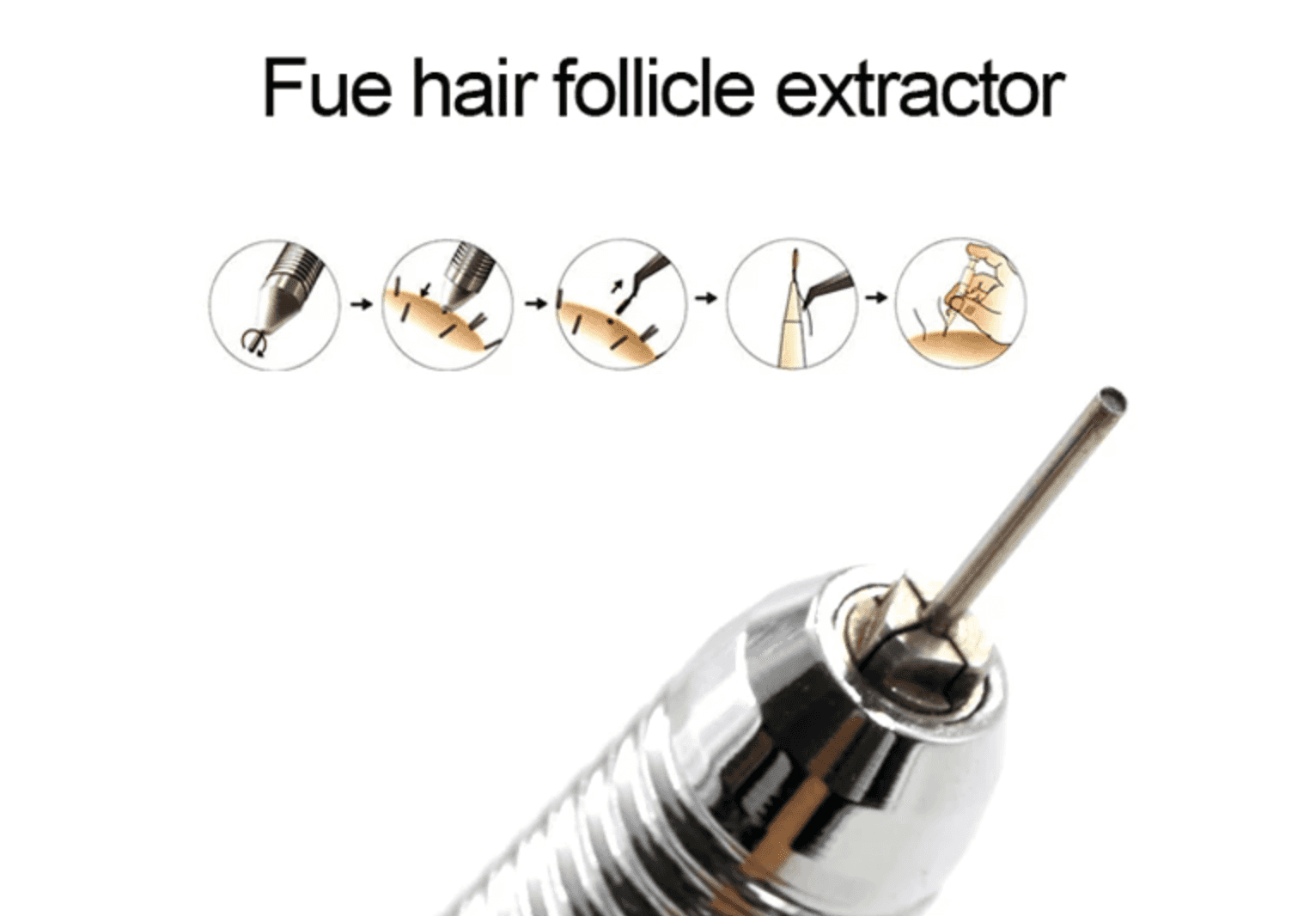
These are much more expensive versions of Machinery of what people could use and get in exactly the same result really using a much cheaper handheld.
We could put a selection of grafts from a handheld device whether it be a sharp punch will be a dull punch or a hybrid punch we could give a selection of grafts from the NeoGraf and Smartgraft and you probably wouldn’t be able to tell even doctors wouldn’t be able to tell which machine is.
This really is interesting because they are nice pieces of machinery but it’s very expensive when it doesn’t really give you much of an advantage over a much cheaper piece of machinery.
What is ARTAS?
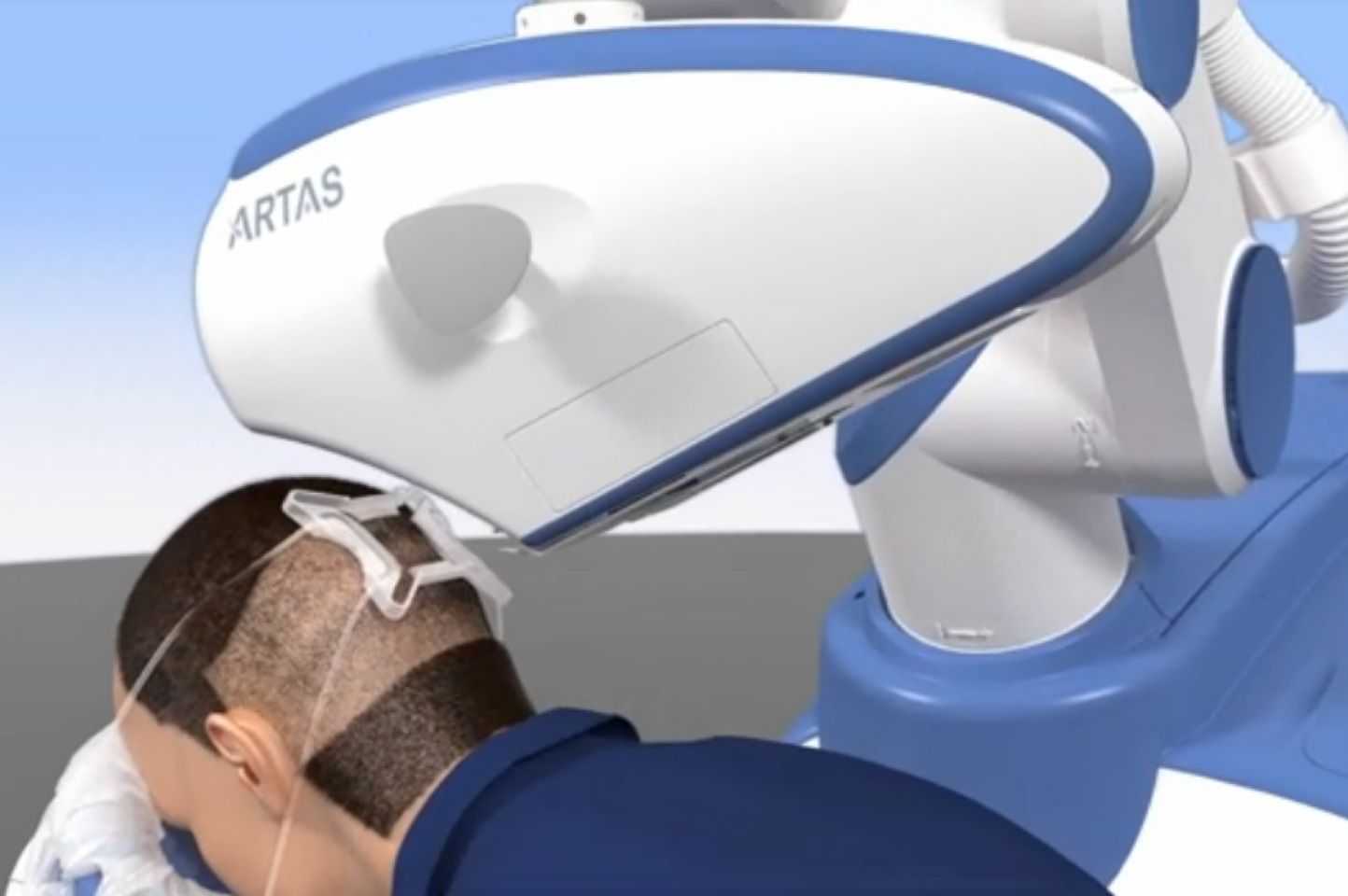
Now we are getting into the really expensive machinery that’s the ARTAS which is a robotic system. This is designed to be completely different, this robotic system uses a twin video camera system to give a kind of a pseudo-three-dimensional aspect to it.
The robot itself uses the two video cameras to focus on the selected follicular unit that you’re going to harvest and it does it automatically.
This does not require the surgeon to actually create the cut the robot creates the cut. the surgeon’s role as the artist is to control the robot and the robot produces the cutting.
Basically what happens is that as the surgeon I get to decide where I want to take the harvest from and mark the area out for the machine.
How does the ARTAS machine work?
We’ve stretched the skin and then I set the spacing between the cuts. I look at the density of the area and decide how many grafts I want to take out of this area so it doesn’t become see-through.
I decide that and I put that information into the machinery. I decide how deeply I want to cut because some people have thinner skin some people have thicker skin. There is a certain skill to the artist because you’re not relying upon tactile feedback.
You can set the machine that we have and set various parameters but at the end of the day, it varies from patient to patient it varies from zone to zone in the back of the scalp.
There are certain parts of the scalp where you press a little bit hard and use a little bit more force to get the graft or turn the speed up, they’re just slight changes.
You do it almost automatically when you’re doing handheld but you have to really dial down those parameters when you’re doing with the ARTAS.
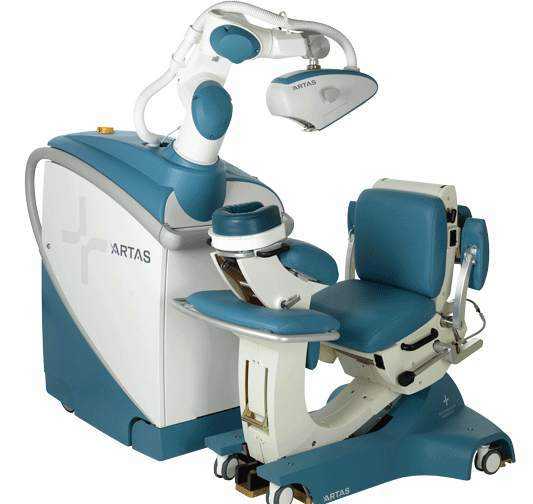
When you’re doing it with an ARTAS you’re relying on visual clues, so you’re watching what the graphs look like whether they’re sitting out whether they’re down too deep whether the punch went deep enough to make the cut with the bunch. If it went too deep and the graph was pushed down. There are a number of things that happen there.
Does the robotic system give a better result in FUE transplants?
The answer is no, it doesn’t necessarily give you a better result at all. Again be wary of the marketing. ARTAS for me is a labor-saving device it’s not something that says if I use an ARTAS I’m going to get a wonderful result.
If another doctor used a handheld on the same patient it will get a lesser result, that’s absolutely not true. I am in no way criticizing other surgeons’ ability to harvest to move their handheld devices. The ARTAS machine is a labor-saving device.
If I’m doing a large number of grafts which takes a goodly period of time most people don’t have as much more than 500 grafts per hour. If you think about having to do 2000 four applications you’re doing 4 hours with their drill in their hands making these cuts it’s quite tiring.
It’s a very physically demanding process so the ARTAS robotic device was designed to be reduced the physical workload on the surgeon.
Really what happens is mostly it’s just making the cut and you still have to use forces to pluck the graft out just like you would with a handheld device. ARTAS is a wonderful piece of technology the new iterations of the software are great they are basically able to make recipients' ID incisions with the robot.
They’re now at the stage of developing a technique of being able to insert the grafts into the slits using the robot itself.
Not a complete technology yet
Even though it seems like this is a way of the future it probably is still an anemia niche area because it still has to be very closely controlled by a knowledgeable surgeon.
I mean that’s the important part because we’ve seen patients that have had very poor outcomes with the ARTAS and the same thing very poor outcomes with the handheld machine. So it is user-dependent but it's a user in different aspects.
With the ARTAS you still have to maintain an eagle eye on what is going on with the machine with each quadrant and in each part of the scalp.
Usage of the ARTAS machine
Now we get into the contentious area about the use of these machines. Certainly, in many places in the world at the moment, the evolution of these machines has meant there’s an evolution to the doctor not being the one operating the machinery.
If I can control the robot with a pendant or at the computer so can anybody else, that’s the reality because it doesn’t rely upon my hand-eye coordination to cut the grass.
What worryingly is starting to happen around the world is that there are many clinics using these machines where the doctors are not in charge of the process.
We do not believe this is good for the field we certainly do not believe this is good for the patient. There’s none of this devolve going on with FUT by the way because nobody in their right mind is going to cut a piece of skin out and sew it up if they don’t have a medical qualification.
Caution
A lot of people without any health licensing or health training feel they can use this kind of technology because what we doing here is just drilling a little hole.
We explained in previous posts about the risks associated, if you create too much scarring in an area you can create a see-through, you can create infections there are all sorts of things that could happen we’re not trying to talk it out of surgery we’re just saying these are surgical risks.
In our opinion, you need to be in the hands of a qualified medical professional who understands both how to diagnose and how to manage a problem if it occurs and prevent it by not creating the problem in the first place.
This is not a way for doctors to step out of the process in our opinion this is a way for the doctor to remain in the process using the technology to assist him or her the surgeon performing the procedure not to hand it off to somebody else.
A lot of people go online they’re doing research and this is sometimes a selling point or we’ve got the NeoGraft we’ve got the Smartgraft. It’s all very good to have that machinery but it’s the person who’s driving that machinery super important it’s the skill set to be able to recognize what do I need to do, how do I need to do it in a skilled and yet artistic way to get the best possible outcome.
These technologies are FUE-based technologies to assist the surgeon in the proper performance and accurate performance of FUE.
I hope this is clarified how we can get through some of the smoke and mirrors of the marketing and get down to the tin tacks and what actually this technology really means.
It means you better be in the hands of someone who knows what they’re doing.


